
Introduction
The first time I tried meal prep bowls for beginners, I overcooked the rice, underseasoned the chicken, and ran out of containers halfway through Sunday. It wasn’t pretty.
But that clumsy first attempt taught me more about weekly cooking rhythm than any recipe card could, and after years of refining the process — first for myself, then for readers who kept asking how to start without feeling overwhelmed — I’ve landed on a system that actually works for real, busy people.
Meal prep bowls are simply a protein, a carb, a vegetable, and a sauce, portioned into containers ahead of time so lunch (or dinner) is ready in minutes. That’s the whole idea.
No fancy equipment, no complicated technique, just a repeatable formula you can rotate all year. This guide walks through 20 easy, beginner-friendly bowl recipes, plus the storage, reheating, and shopping strategy that makes the habit stick past week one.
Why Meal Prep Bowls Work So Well for Beginners
Meal prep bowls solve the exact problem that makes weeknight cooking exhausting: decision fatigue. In my experience creating practical meal plans, the biggest reason people abandon meal prep isn’t lack of time — it’s lack of a system.
A bowl format removes the guesswork because you’re not planning five different dinners; you’re building variations on one formula.
They’re also naturally portion-controlled, budget-friendly (rice, beans, and frozen vegetables are some of the cheapest calories at the grocery store), and endlessly customizable for different diets, whether that’s high-protein, low-carb, vegetarian, or gluten-free.
The Beginner’s Bowl Formula
Before jumping into recipes, it helps to understand the four building blocks:
- Protein (25–30%): chicken thighs, ground turkey, tofu, chickpeas, salmon, or eggs
- Carb (25–30%): brown rice, quinoa, farro, roasted potatoes, or noodles
- Vegetables (30–40%): roasted broccoli, sautéed peppers, spinach, shredded cabbage
- Sauce (a few tablespoons): this is what keeps bowls from tasting boring
Once this formula clicks, you can build dozens of bowls from a short shopping list.
20 Easy Meal Prep Bowl Recipes
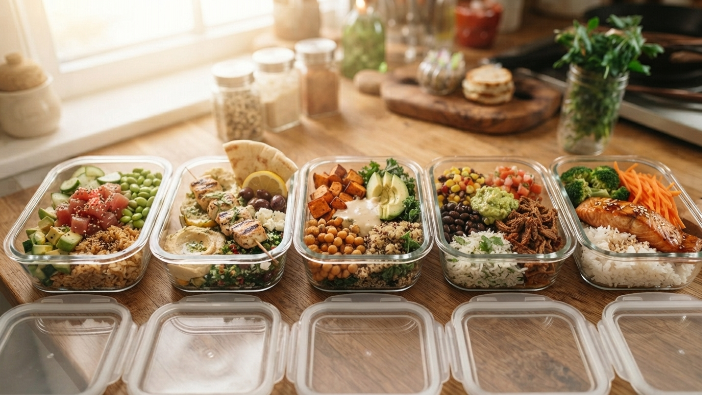
1. Honey Garlic Chicken and Rice Bowl (Full Recipe)
Prep Time: 15 minutes | Cook Time: 20 minutes | Total Time: 35 minutes | Servings: 4
Ingredients:
- 1.5 lbs boneless chicken thighs, diced
- 2 tbsp soy sauce (swap: tamari for gluten-free)
- 2 tbsp honey
- 2 cloves garlic, minced
- 3 cups cooked brown rice
- 2 cups steamed broccoli
- 1 tbsp sesame oil
- Sesame seeds, optional
Instructions:
- Heat sesame oil in a large skillet over medium-high heat.
- Add chicken and cook 6–7 minutes until browned.
- Stir in garlic, soy sauce, and honey; simmer 3–4 minutes until glossy and thickened.
- Divide rice, broccoli, and chicken evenly among four containers.
- Top with sesame seeds before sealing.
Storage: Refrigerate up to 4 days in airtight containers. Freezer Instructions: Freeze up to 3 months; thaw overnight before reheating. Reheating: Microwave 2–3 minutes, stirring halfway. Nutrition Highlights (approx. per serving): 420 calories, 34g protein, 45g carbs, 10g fat. Pro Tip: Double the sauce and reserve half to drizzle fresh after reheating — bowls taste noticeably less dry. Variation: Swap chicken for extra-firm tofu for a vegetarian version.
2. Southwest Ground Turkey and Sweet Potato Bowl (Full Recipe)
Prep Time: 10 minutes | Cook Time: 25 minutes | Total Time: 35 minutes | Servings: 4
Ingredients:
- 1 lb ground turkey
- 1 tbsp taco seasoning (or homemade blend)
- 2 cups cubed roasted sweet potato
- 1 cup black beans, drained
- 1 cup corn
- Fresh cilantro and lime wedges
Instructions:
- Roast sweet potato cubes at 400°F for 20 minutes.
- Brown turkey in a skillet, breaking it apart, then stir in taco seasoning.
- Layer turkey, sweet potato, beans, and corn into containers.
- Finish with cilantro and a lime wedge before sealing.
Storage: Up to 4 days refrigerated. Freezer Instructions: Freeze turkey and beans separately from sweet potato for best texture; up to 2 months. Reheating: Microwave 2 minutes; add lime juice fresh after reheating. Nutrition Highlights: 390 calories, 28g protein, 38g carbs, 12g fat. Pro Tip: Roast sweet potatoes on a single layer — crowding the pan steams them instead of caramelizing them. Variation: Swap turkey for lentils for a plant-based version.
3. Mediterranean Chickpea and Farro Bowl (Full Recipe)
Prep Time: 10 minutes | Cook Time: 25 minutes | Total Time: 35 minutes | Servings: 4
Ingredients:
- 2 cups cooked farro (swap: quinoa)
- 1 can chickpeas, roasted with olive oil and cumin
- 1 cup cherry tomatoes, halved
- 1/2 cup cucumber, diced
- 1/3 cup crumbled feta
- Lemon-tahini dressing
Instructions:
- Roast chickpeas at 400°F for 20 minutes until crisp.
- Divide farro, tomatoes, cucumber, and chickpeas into containers.
- Top with feta; store dressing separately.
Storage: 4 days refrigerated; keep dressing in a small side container. Reheating: Best served cold or at room temperature. Nutrition Highlights: 360 calories, 15g protein, 48g carbs, 12g fat. Pro Tip: Adding dressing right before eating keeps vegetables from turning soggy in the fridge. Variation: Add grilled chicken for extra protein.
More Quick-Build Bowls (21–20)
The remaining bowls follow the same formula — swap the protein, carb, and sauce, then batch-cook once.
- Teriyaki Salmon and Quinoa Bowl — Pan-sear salmon, toss with store-bought teriyaki, serve over quinoa with steamed edamame. Swap: canned salmon for a budget version.
- BBQ Pulled Chicken and Corn Bowl — Slow-cook chicken breast with BBQ sauce, shred, and pair with roasted corn and brown rice.
- Buffalo Chickpea Bowl — Roasted chickpeas tossed in buffalo sauce over rice with celery and a light ranch drizzle.
- Greek Turkey Meatball Bowl — Baked turkey meatballs, tzatziki, cucumber, and couscous.
- Cajun Shrimp and Rice Bowl — Quick-sautéed shrimp with Cajun seasoning over rice and sautéed peppers.
- Peanut Tofu Noodle Bowl — Crispy baked tofu, rice noodles, shredded carrots, and a peanut sauce.
- Chicken Fajita Bowl — Sliced chicken and bell peppers sautéed with fajita seasoning over cilantro-lime rice.
- Beef and Broccoli Bowl — Thin-sliced beef stir-fried with broccoli in a garlic-ginger sauce over rice.
- Egg and Veggie Breakfast Bowl — Scrambled eggs, roasted potatoes, and spinach for a savory morning prep.
- Lentil and Roasted Veggie Bowl — Cooked green lentils with roasted zucchini, carrots, and a mustard vinaigrette.
- Pesto Chicken and Orzo Bowl — Grilled chicken, orzo, cherry tomatoes, and basil pesto.
- Korean-Inspired Beef Bulgogi Bowl — Thin beef marinated in soy-garlic sauce, served over rice with pickled cucumber.
- Blackened Cod and Rice Bowl — Blackened seasoning on cod fillets with brown rice and steamed green beans.
- Chickpea Curry Bowl — Simple chickpea coconut curry over basmati rice, ready in 25 minutes.
- Turkey Taco Bowl — Seasoned ground turkey, black beans, rice, and pico de gallo.
- Southwest Quinoa and Black Bean Bowl (Vegan) — Quinoa, black beans, corn, avocado added fresh.
- Honey Mustard Chicken and Roasted Veggie Bowl — Baked chicken thighs glazed with honey mustard, roasted carrots and Brussels sprouts.
Storage, Freezing, and Reheating Tips
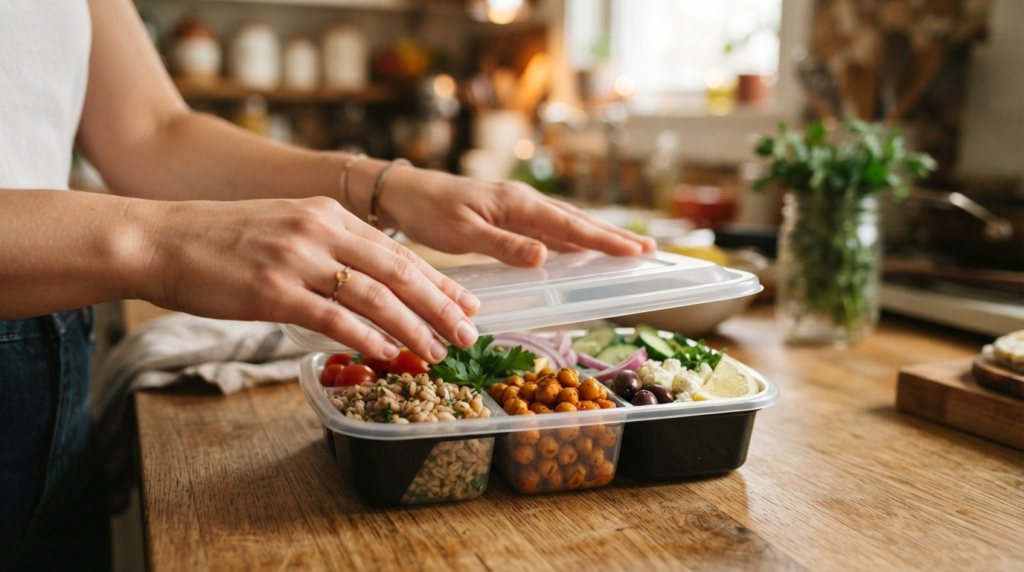
Glass containers with locking lids are worth the investment for meal prep bowls for beginners — they don’t stain, don’t warp in the microwave, and seal tighter than most plastic options.
As a general rule, cooked grains and proteins last 3–4 days refrigerated, while raw-vegetable components like lettuce or cucumber should be added fresh to avoid sogginess.
For freezing, rice-and-protein bowls hold up well for up to 3 months, but skip freezing anything with mayonnaise-based sauces or fresh dairy, since they separate on thawing. Reheat frozen bowls by thawing overnight in the fridge, then microwaving in 90-second intervals, stirring between each.
Common Beginner Mistakes
One thing I’ve consistently noticed while developing recipes for new meal preppers is that most mistakes come from doing too much on day one.
Roasting five vegetables, cooking three proteins, and prepping four sauces in a single afternoon leads to burnout by week two.
Other frequent missteps include underseasoning (cold food needs more salt and acid than you’d think), storing sauce directly on rice, and skipping labels — three days later, “chicken bowl #2” is a mystery.
Expert Meal Prep Checklist
- Choose 1 protein, 1 carb, 1 vegetable, and 1 sauce per week to start
- Cook proteins and grains in bulk on the same day
- Store sauces and fresh add-ins separately
- Label containers with contents and date
- Cool food fully before sealing to prevent condensation
- Rotate flavors weekly to avoid burnout
Real Example: How a First-Time Meal Prepper Built a Sustainable Habit
A reader I worked with, a 26-year-old graphic designer new to cooking, started meal prepping after realizing she spent close to $80 a week on takeout lunches.
Her first attempt was ambitious — five different recipes in one Sunday — and she quit after two weeks, exhausted.
On her second try, she used the bowl formula above: one protein, one carb, one vegetable, rotated weekly.
Within a month, her grocery spending dropped by roughly 40%, and she reported actually looking forward to lunch instead of dreading it.
The lesson readers can take from her experience is simple: consistency beats complexity, especially in the first month.
Conclusion
Meal prep bowls for beginners don’t require perfection — they require a system you can repeat. Start with one protein, one carb, one vegetable, and one sauce, master that rhythm, and layer in variety once it feels automatic.
After testing dozens of recipes in my own kitchen over the years, the bowls that stuck were never the most elaborate ones; they were the simplest ones I could actually make again next week.
Frequently Asked Questions
What are the best meal prep bowls for beginners?
The easiest starting bowls combine a simple protein like chicken or ground turkey, a cooked grain like rice or quinoa, one roasted vegetable, and a pourable sauce.
How many days do meal prep bowls last in the fridge?
Most meal prep bowls for beginners stay fresh for 3–4 days when stored in airtight containers and cooled before sealing.
Can I freeze meal prep bowls?
Yes, most rice-and-protein bowls freeze well for up to 3 months. Avoid freezing fresh vegetables, dairy-based sauces, or mayonnaise.
What containers are best for meal prep bowls?
Glass containers with locking lids are generally best because they resist staining, reheat evenly, and seal more securely than standard plastic.
How do I keep meal prep bowls from getting soggy?
Store sauces and raw vegetables like lettuce or cucumber separately, adding them just before eating.
What’s a budget-friendly protein for meal prep bowls?
Chicken thighs, eggs, canned beans, and lentils are among the most affordable proteins per serving.
Can meal prep bowls be reheated in the microwave?
Yes, most bowls reheat well in 2–3 minutes; stirring halfway helps distribute heat evenly.
How do I make meal prep bowls more flavorful?
Season boldly before storing, since cold food dulls flavor, and add a fresh sauce or acid (lime, vinegar) right before eating.