
Introduction
The moment I stopped buying pre-made spice packets came down to reading a taco seasoning label and counting six ingredients I couldn’t identify, mostly anti-caking agents and unnecessary sugar.
Since then, I’ve spent years researching home cooking techniques and testing ratios in my own kitchen, and homemade seasoning blends have become one of the simplest upgrades I recommend to almost anyone trying to cook better food at home.
They’re cheaper per ounce, free of the fillers and excess sodium in most store-bought mixes, and endlessly customizable to your own taste.
This guide covers 18 homemade seasoning blends every home cook should have on hand, from an everyday all-purpose mix to specialty blends for tacos, steak, and roasted vegetables, along with storage tips and substitution guidance for anyone missing a spice or two.
Why Make Your Own Seasoning Blends
Store-bought seasoning packets are convenient, but they’re often padded with salt, sugar, and anti-caking agents to extend shelf life, which dilutes actual flavor.
In my experience creating practical meal plans, homemade seasoning blends consistently taste fresher because whole dried spices lose potency more slowly than pre-ground mixes sitting on a store shelf for months.
They’re also significantly cheaper — a jar of taco seasoning packets can cost more per ounce than buying the individual spices and blending a much larger batch yourself.
The Basic Seasoning Blend Formula
- Base: salt and pepper as the foundation
- Warmth: paprika, cumin, or chili powder
- Aromatics: garlic powder, onion powder
- Herbs: dried oregano, basil, thyme, or parsley
- Optional heat: cayenne or crushed red pepper
18 Homemade Seasoning Blends
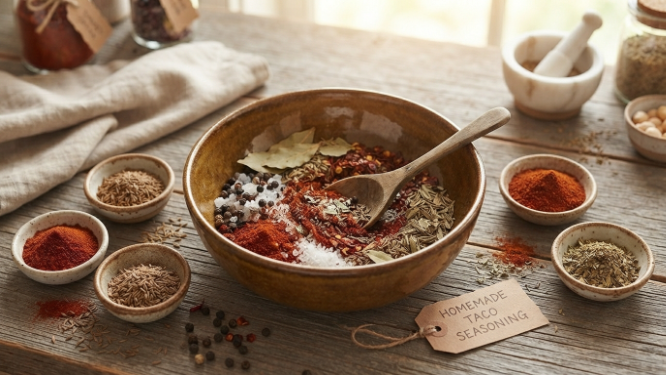
1. Classic Taco Seasoning (Full Recipe)
Prep Time: 5 minutes | Total Time: 5 minutes | Yield: about 1/3 cup (enough for 2–3 lbs meat)
Ingredients:
- 2 tbsp chili powder
- 1 tbsp ground cumin
- 1 tbsp paprika
- 2 tsp garlic powder
- 2 tsp onion powder
- 1 tsp oregano
- 1 tsp salt (swap: reduce or omit for low-sodium)
- 1/2 tsp black pepper
- 1/4 tsp cayenne, optional
Instructions:
- Combine all ingredients in a small bowl.
- Whisk thoroughly to distribute evenly.
- Store in an airtight jar.
- Use 2 tablespoons per pound of meat, plus 1/4 cup water when cooking.
Storage: Store in an airtight container in a cool, dark pantry for up to 6 months. Freezer Instructions: Not necessary; dry blends store well at room temperature. Reheating: Not applicable. Nutrition Highlights (approx. per tbsp): 15 calories, 0.5g protein, 3g carbs, 0.5g fat. Pro Tip: Toast the cumin and chili powder in a dry pan for 30 seconds before mixing to deepen the flavor. Variation: Add a pinch of smoked paprika for a smokier, barbecue-leaning version.
2. All-Purpose Seasoning Salt (Full Recipe)
Prep Time: 5 minutes | Total Time: 5 minutes | Yield: about 1/2 cup
Ingredients:
- 3 tbsp salt
- 1 tbsp garlic powder
- 1 tbsp onion powder
- 1 tbsp paprika
- 1 tsp black pepper
- 1 tsp dried parsley
- 1/2 tsp celery seed, optional
Instructions:
- Combine all ingredients in a bowl and whisk together.
- Transfer to a shaker jar for easy use.
- Use as an all-purpose seasoning on meats, vegetables, and eggs.
Storage: Keeps up to 6 months in a sealed, airtight jar away from heat and light. Nutrition Highlights: 5 calories, 0g protein, 1g carbs, 0g fat per 1/2 tsp. Pro Tip: Use fine sea salt rather than coarse salt for a more even, pourable texture. Variation: Reduce salt by half and add extra garlic and onion powder for a lower-sodium version.
3. Italian Herb Seasoning (Full Recipe)
Prep Time: 5 minutes | Total Time: 5 minutes | Yield: about 1/3 cup
Ingredients:
- 2 tbsp dried basil
- 2 tbsp dried oregano
- 1 tbsp dried thyme
- 1 tbsp dried rosemary, crushed
- 1 tbsp dried marjoram
- 1 tsp garlic powder
- 1/2 tsp crushed red pepper, optional
Instructions:
- Combine all dried herbs and spices in a bowl.
- Crush rosemary lightly between fingers to release oils before mixing.
- Store in an airtight jar.
- Use in pasta sauces, on roasted vegetables, or mixed into olive oil for bread dipping.
Storage: Keeps up to 6 months in a sealed container in a cool, dark place. Nutrition Highlights: 5 calories, 0g protein, 1g carbs, 0g fat per 1/2 tsp. Pro Tip: Crushing dried herbs between your palms before mixing releases more essential oils and flavor. Variation: Add dried sage for a more autumn-leaning flavor profile.
More Essential Homemade Seasoning Blends (4–18)
- Cajun Seasoning — Paprika, cayenne, garlic powder, onion powder, oregano, thyme, and black pepper for a bold, smoky-spicy blend.
- Ranch Seasoning — Dried dill, parsley, garlic powder, onion powder, and buttermilk powder for dips and dressings.
- Everything Bagel Seasoning — Sesame seeds, poppy seeds, dried garlic, dried onion, and flaky salt.
- Steak Rub — Coarse salt, black pepper, garlic powder, paprika, and a touch of brown sugar for caramelization.
- Poultry Seasoning — Sage, thyme, marjoram, rosemary, and black pepper for roasted chicken and turkey.
- Curry Powder Blend — Turmeric, cumin, coriander, ginger, and a pinch of cinnamon for warmth.
- Herbes de Provence — Thyme, rosemary, oregano, marjoram, and dried lavender for French-inspired dishes.
- Chili Powder Blend — Ancho chili, cumin, garlic powder, oregano, and smoked paprika.
- Blackening Seasoning — Paprika, cayenne, garlic powder, onion powder, thyme, and oregano for fish and chicken.
- Pumpkin Pie Spice — Cinnamon, ginger, nutmeg, allspice, and cloves for fall baking.
- Greek Seasoning — Oregano, garlic powder, onion powder, dried mint, and lemon zest.
- Jerk Seasoning — Allspice, thyme, cayenne, garlic powder, and brown sugar for a Caribbean-style rub.
- Garlic Herb Butter Seasoning — Garlic powder, parsley, chives, and onion powder to mix into softened butter.
- Smoky BBQ Rub — Smoked paprika, brown sugar, garlic powder, onion powder, and chili powder.
- Lemon Pepper Seasoning — Dried lemon zest, coarse black pepper, garlic powder, and a touch of salt.
Storage and Shelf Life Tips
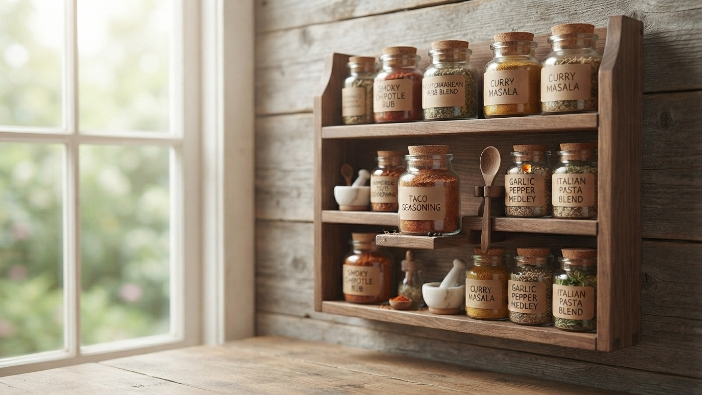
Homemade seasoning blends should be stored in airtight glass jars, away from heat, light, and moisture — a spice drawer works better than a shelf directly above the stove, where heat degrades flavor faster.
Most dried spice blends keep their potency for about 6 months, though they remain safe to use much longer; they simply lose some vibrancy over time. Labeling jars with the blend name and date mixed makes it easy to rotate through older blends first, the same way you would with pantry staples.
Common Mistakes When Making Spice Blends
One thing I’ve consistently noticed while developing recipes is that people often use pre-ground spices that have been sitting in the pantry for years, which produces a flat, dusty flavor rather than the bright, punchy taste fresh blends should have.
It’s worth replacing base spices like paprika, cumin, and chili powder roughly once a year. Other common mistakes include not tasting the blend before using it in a full recipe (a quick taste on a piece of bread or cracker tells you a lot), over-salting blends meant to season already-salty dishes, and storing jars near the stove, where heat and steam shorten shelf life significantly.
Expert Checklist for Better Seasoning
- Buy whole spices and grind fresh when possible for maximum flavor
- Store blends in airtight glass jars away from heat and light
- Label jars with the blend name and date mixed
- Taste-test a small amount before seasoning a full dish
- Replace base spices roughly once a year for best flavor
- Scale recipes up in bulk to save time and money
Case Study: A Home Cook Who Replaced Her Entire Spice Cabinet
A reader emailed after replacing every store-bought seasoning packet in her pantry with homemade seasoning blends over the course of a month, starting with taco seasoning and expanding from there.
She reported that her grocery bill for spices dropped noticeably since a batch of homemade taco seasoning costs a fraction of buying individual packets each time she made tacos, and she said dishes tasted noticeably fresher, particularly the Italian herb blend used in her weekly pasta sauce.
What made the switch sustainable, she noted, wasn’t overhauling everything at once — it was replacing one blend at a time as she ran out of the store-bought version.
The lesson for readers considering the same switch: gradual replacement removes the pressure of an all-or-nothing pantry overhaul.
Conclusion
Homemade seasoning blends are one of the easiest ways to noticeably improve everyday cooking without adding extra time or cost.
Once a few base blends — taco seasoning, all-purpose seasoning salt, and Italian herbs — become pantry staples, store-bought packets start to feel unnecessary.
After testing dozens of recipes in my own kitchen, these are the blends I return to most often, not because they’re complicated, but because they consistently make simple ingredients taste like more effort went into them than actually did.
Frequently Asked Questions
Are homemade seasoning blends cheaper than store-bought? Yes, homemade seasoning blends are typically significantly cheaper per ounce since you’re buying spices in bulk rather than paying for individual packets.
How long do homemade seasoning blends last? Most homemade seasoning blends stay flavorful for about 6 months when stored in an airtight container away from heat and light.
Can I make homemade seasoning blends without salt? Yes, salt can be reduced or omitted entirely in most blends, which is especially useful for anyone managing sodium intake.
What’s the easiest homemade seasoning blend to start with? Taco seasoning and all-purpose seasoning salt are both simple, versatile starting points for beginners.
Do homemade seasoning blends need to be refrigerated? No, dry spice blends should be stored in a cool, dark pantry rather than the refrigerator, where moisture can cause clumping.
Can I substitute fresh herbs in a dried seasoning blend? Fresh herbs can replace dried ones in cooked dishes, generally using about three times the amount, but they’re not ideal for long-term storage blends.
What container is best for storing homemade seasoning blends? Small airtight glass jars with tight-fitting lids work best, ideally stored in a spice drawer or cabinet away from the stove.
Can homemade seasoning blends be given as gifts? Yes, seasoning blends make popular homemade gifts when packaged in small jars with a printed label and suggested uses.