
Author Bio
I write about food, mostly the kind that takes patience — fermentation, slow cooking, things that reward you for waiting. I’ve spent years reading nutrition research and testing recipes in my own kitchen until they actually work for someone who isn’t already obsessed with this stuff. When I’m not fermenting something on my counter, I’m probably reading about it, or making the same recipe for the fifth time because the fourth attempt wasn’t quite right.My first jar of sauerkraut was a total loss. I’d packed the cabbage way too loosely and didn’t actually weigh anything, just kind of guessed at the salt, and by day four the whole apartment smelled like something had died in the pantry. That was almost eight years back now.
Introduction:
Since then I’ve gone through more cabbage, cucumbers, milk, and garlic than I could possibly count, and the batches have ranged from genuinely great to ones I dumped straight into the compost without tasting twice.
I bring up the bad ones on purpose — most fermentation write-ups online skip past the failures, and the failures are honestly where most of the useful stuff gets learned.
If your stomach’s been feeling weird after meals lately, or probiotics have caught your interest but the supplement aisle feels like a waste of money, keep reading.
What Fermented Foods Actually Are
People figured this out long before refrigerators existed, obviously — it was a preservation method before it was anything trendy.
What’s actually happening is bacteria or yeast breaking down the sugars and starches already sitting in the food, and depending on what you’re fermenting, you end up with lactic acid, alcohol, or acetic acid as the byproduct.
That’s the whole reason sauerkraut tastes sour, kefir gets that faint fizz, and kimchi ends up tasting like so much more than raw cabbage ever could on its own.
It covers more ground than most people assume, too. Sauerkraut and kimchi. Yogurt and kefir. Sourdough. Kombucha. Different foods, different processes technically, but the same basic mechanism underneath all of it — live cultures doing the actual work.
Why Fermented Foods Matter for Digestion
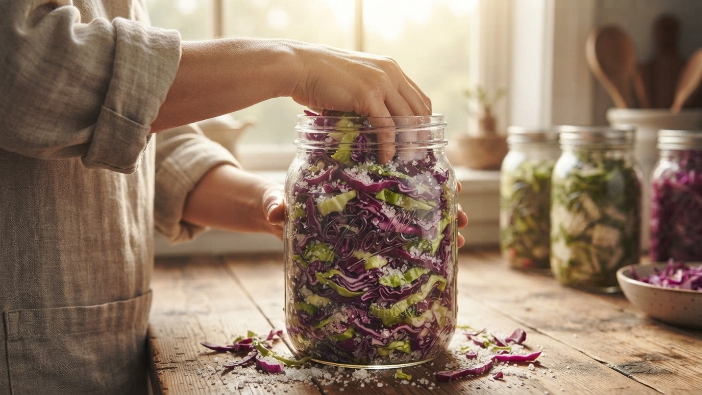
I’m not a doctor, and I want that on the record before anything else. What I can pass along is what keeps showing up across the nutrition research I’ve read over the years, plus what I’ve noticed just from feeding this stuff to my own family for a long time now: these foods introduce beneficial bacteria into your gut, and a gut microbiome that’s in decent shape ties into digestion, how well you absorb nutrients, and immune function too.
People ask if the yogurt from the grocery store counts. Sometimes. A lot of it gets pasteurized after fermenting though, which kills the cultures you’re trying to get, or it’s got enough added sugar to cancel out whatever benefit was there in the first place. Making it yourself means you know what’s actually in the jar.
Something I’ve noticed after doing this a long time: people want results overnight and get discouraged fast. That’s not how gut health works. It’s slow, and it depends on you actually keeping it up rather than eating one jar of kraut and moving on.
Essential Equipment (You Need Less Than You Think)
I bought an airlock lid system, a ceramic fermentation crock, pH testing strips, back when I started. Used maybe a third of it. Here’s the real list:
| Equipment | Needed For | Optional? |
| Wide-mouth glass jar | All vegetable ferments | Required |
| Non-iodized salt | Vegetable ferments | Required |
| Fermentation weight or cabbage leaf | Keeping veggies submerged | Highly recommended |
| Cheesecloth or loose lid | Airflow during fermentation | Required |
| Kefir grains | Milk kefir | Required for kefir only |
| Digital kitchen scale | Accurate salt ratios | Recommended |
A plain mason jar covers most of what you’ll ever actually make.
Recipe 1: Classic Homemade Sauerkraut
I hand this recipe to every beginner because there’s almost nothing to get wrong.
Ingredients
- 1 medium green cabbage (about 2 lbs), core removed, thinly sliced
- 1 tablespoon non-iodized salt (roughly 2% of cabbage weight)
- Optional: 1 teaspoon caraway seeds
Instructions
- Weigh your shredded cabbage and work out 2% of that weight in salt.
- Massage the salt into the cabbage for 5–10 minutes, until it starts releasing liquid.
- Pack it tightly into a clean jar, pressing until the brine covers the cabbage.
- Put a weight or a spare cabbage leaf on top so nothing floats up.
- Cover loosely with cheesecloth, keep it out of direct sun, and leave it 5–10 days.
- Start tasting on day 3. Once it’s tangy enough for you, seal it and put it in the fridge.
Recipe 2: Quick Beginner Kimchi
I cut this down after watching too many people give up halfway through a traditional kimchi paste ingredient list.
Ingredients
- 1 napa cabbage, chopped
- 1/4 cup sea salt
- 4 cups water
- 2 tablespoons Korean chili flakes (gochugaru)
- 3 garlic cloves, minced
- 1 tablespoon grated ginger
- 1 tablespoon fish sauce (skip it for vegan)
- 2 green onions, chopped
- 1 carrot, julienned
Instructions
- Dissolve the salt in water and soak the cabbage 1–2 hours, until it goes slightly limp. Drain, rinse.
- Mix chili flakes, garlic, ginger, fish sauce, and a splash of water into a paste.
- Work the paste into the cabbage along with the green onions and carrot.
- Pack it into a jar and press out any air pockets.
- Leave at room temperature 2–5 days, then refrigerate.
Recipe 3: 24-Hour Milk Kefir
Fastest thing on this list. Good place to start if sauerkraut feels like too much commitment.
Ingredients
- 1 tablespoon active milk kefir grains
- 2 cups whole milk (or coconut milk if you’re avoiding dairy)
Instructions
- Drop the grains in a clean jar and pour the milk over them.
- Cover loosely, leave at room temperature 24 hours.
- Strain out the grains with a plastic or wooden strainer — not metal.
- Refrigerate what you’ve strained, save the grains for the next round.
Recipe 4: Fermented Garlic Honey
This one’s basically always in my pantry at this point. Good in tea, good stirred into a marinade, good on its own by the spoonful if you’re feeling run down.
Ingredients
- 1 cup peeled garlic cloves
- Raw honey, enough to cover
Instructions
- Drop the garlic cloves into a small jar.
- Pour honey over until it’s fully covered.
- Cap it loosely and burp the jar daily to let gas escape.
- Let it sit 2–4 weeks, then keep it at room temperature.
Common Fermentation Mistakes

Made basically all of these at some point myself:
- Iodized salt messes with fermentation, so skip it. Sea salt or kosher salt only.
- If any vegetable pokes up above the brine, it’s exposed to air, and that’s how mold starts.
- Don’t seal the jar too tight. Gas builds up and has to go somewhere — I had a jar actually pop its lid across the kitchen once, which was a mess I’m still finding cabbage from.
- Direct sunlight speeds up spoilage, not fermentation, even though it feels like it should help.
- And don’t quit after one failed batch. Even people who’ve done this for a decade still get a dud now and then.
Storage and Shelf Life
Once it tastes right, the fridge slows everything down. Sauerkraut and kimchi generally hold 4–6 months refrigerated, and they keep changing flavor slowly the whole time.
Milk kefir is best within 1–2 weeks. Fermented garlic honey can sit at room temperature for up to a year, since honey basically preserves itself.
Serving Ideas
My friend Rachel keeps a jar of kraut in her office mini-fridge and just spoons some over her lunch salad — she started doing it after a stomach bug last year and never really stopped.
If you’ve got kids who won’t touch anything sour, blending kefir into a smoothie hides it well enough that mine never noticed until she was maybe seven. Kimchi’s great mixed into fried rice at the end, right before it comes off the heat. Kraut on a grain bowl works too.
When I feel like I’m coming down with something, a spoonful of the garlic honey in hot water is usually what I go for before anything else in the medicine cabinet.
Seasonal Variations
Once it gets cold, carrots, turnips, and beets ferment right alongside cabbage without much fuss. Summer’s a different story — cucumbers and radishes move faster in the heat, sometimes ready in half the time, and they come out crisper and lighter than anything you’d get in January.
Nutrition Snapshot
| Food | Serving Size | Calories | Protein | Notable Nutrients |
| Sauerkraut | 1/2 cup | 20 | 1g | Vitamin C, Vitamin K, live cultures |
| Kimchi | 1/2 cup | 25 | 1g | Vitamin A, Vitamin C, live cultures |
| Milk Kefir | 1 cup | 110 | 8g | Calcium, B12, live cultures |
| Fermented Garlic Honey | 1 tsp | 20 | 0g | Antioxidants |
If you track your food, Cronometer or MyFitnessPal will let you log these like anything else. A couple of the newer nutrition apps will even guess at probiotic content now based on what you’re eating. Nice if you’re into that level of detail. Not something you need.
Final Thoughts
Sauerkraut first. It’s cheap, forgiving, and everything you learn making it carries over to the rest. Once you’ve got a batch or two under your belt, try kimchi, then kefir, then the garlic honey if you’re curious.
There’s a real difference between something still alive in a jar and something that’s been sitting sealed on a shelf since spring — you can taste it, and honestly you can kind of feel it too, digestively.
Grab a cabbage this weekend. Pack a jar. Give it five days on the counter and see what happens.
Frequently Asked Questions
Where should someone start if they’ve never fermented anything?
Sauerkraut, every time. Two ingredients, no starter culture to find or keep alive, and it’s basically impossible to mess up badly enough to ruin it.
How many days does sauerkraut actually need?
Five to ten, sitting at room temperature. Some people leave it two or three weeks if they want it really sour — that’s more preference than rule.
Is this safe for basically anyone to eat?
Most healthy people, sure. If you’ve got histamine sensitivity, an immune condition, or something your doctor’s already keeping an eye on, it’s worth asking first rather than just diving in.
Can I grab the salt already in my cabinet, or does it matter?
Matters more than people expect. Iodized salt can interfere with the fermentation itself. Grab sea salt or kosher salt instead, and check the label for anti-caking agents while you’re at it.
Mine smells stronger than I expected. Bad sign or normal?
Sour and a bit funky is exactly what you want. If it smells genuinely rotten, or you spot pink or fuzzy spots anywhere, that batch is done — toss it and start over.
Does cooking kill the probiotic benefit?
Yes. High heat wipes out most live cultures, so if that’s the point, add these foods after cooking rather than during.
How much should I be eating per day?
No hard rule exists. A tablespoon or two to start, working up slowly, tends to sit better with your digestion than diving in all at once.
Can I do any of this without dairy?
Yes — sauerkraut and kimchi are already vegan, and coconut milk kefir stands in fine for the dairy version.