
Author Bio
I’m a food content writer who’s spent years digging into nutrition research, food trends, and the everyday link between what we eat and how we feel long-term. My work comes from a mix of careful reading, hands-on recipe testing in my own kitchen, and a lot of conversations with readers working through their own health questions. I’m not a doctor or a registered dietitian — what I bring is research, testing, and a genuine effort to make evidence-based eating feel doable instead of overwhelming.
Introduction:
A reader emailed me a few years back describing something I’d already heard a dozen times, in a dozen different ways — achy joints most mornings, a foggy stretch every afternoon around 3pm, and a doctor who’d told her to “look into her diet” and left it there. No follow-up. No specifics. Just a vague homework assignment with zero instructions attached.
She’s not the only one who’s gotten that non-answer. “Eat less inflammatory food” gets thrown around constantly, and almost nobody explains what that actually looks like on a Tuesday night, tired, hungry, standing in front of an open fridge with nothing obvious to grab.
That gap is basically why this exists. I spent a few years going through the research, testing recipes in my own kitchen, and — this part actually matters — throwing out the ones that were technically anti-inflammatory but tasted like punishment.
What’s left below survived both the science and the taste test, which turned out to be a smaller list than I expected going in.
What “Anti-Inflammatory” Actually Means
Inflammation isn’t the villain, first of all. It’s your body doing its job — healing an injury, fighting off whatever virus is going around. What researchers actually worry about is chronic, low-grade inflammation, the kind that sits in the background for months or years without you clocking it, which gets tied in research to a bunch of long-term health issues down the line.
Food doesn’t single-handedly cause that, and it doesn’t cure it either, not by itself. But there’s a pretty consistent thread in the research: diets heavy on refined sugar, processed meat, too much refined oil tend to line up with higher inflammatory markers, and diets built around vegetables, fatty fish, olive oil, whole grains tend to line up with lower ones.
So none of this was ever about one miracle ingredient. It’s a pattern you build a dinner at a time, which — once it clicked for me — made the whole thing feel a lot less daunting.
Anti-Inflammatory Foods Worth Knowing
A short list of foods kept coming up no matter which studies I dug into, so I’ll just run through them quickly rather than turning it into a chart.
- Fatty fish — salmon, sardines, mackerel — for the omega-3s. Leafy greens, and I mean actually eating them regularly, not once a week in a sad side salad.
- Turmeric and ginger both get studied a lot for compounds tied to inflammation, though how much of that translates to a home-cooked dinner is honestly still debated.
- Olive oil, extra virgin specifically, as close to your default fat as you can manage.
- Berries for the polyphenols.
- Walnuts and flaxseed if nuts are your thing.
- And the cruciferous family — broccoli, Brussels sprouts — which I know nobody’s excited to hear but they matter.
My Favorite Anti-Inflammatory Dinner Recipes
Every recipe below leans on that list somewhere. I just refused to let any of them taste like a compromise, because bland “health food” is exactly how people quit two weeks in — I’ve watched it happen to friends, and honestly done it to myself more than once before I figured this stuff out.
1. Turmeric-Ginger Salmon with Roasted Broccoli
The one I make more than any other is a turmeric-ginger salmon with roasted broccoli, and it’s usually the first thing I hand anyone just starting out because there’s so little room to mess it up.
- Whisk together a tablespoon each of fresh grated turmeric and ginger with a couple tablespoons of olive oil, a minced garlic clove, salt and pepper, and rub that over two salmon fillets.
- Toss two cups of broccoli florets in whatever oil’s left in the bowl, then roast the salmon and broccoli together at 400°F for about 15 minutes.
- Lemon at the end isn’t optional, in my opinion — squeeze it over both right before serving, because skipping that step is the difference between a dish that sings and one that just sits there.
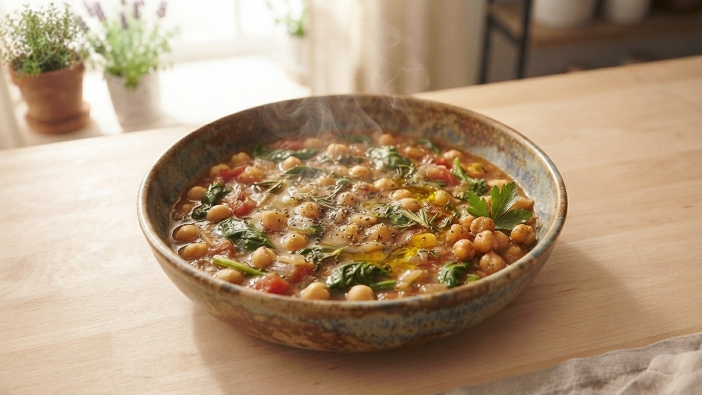
2. Mediterranean Chickpea and Spinach Stew
Then there’s a Mediterranean chickpea and spinach stew I made for the first time on a genuinely miserable cold night, when dealing with meat felt like too much effort.
- It’s stayed in steady rotation since — one of maybe three recipes in my whole collection I’ve genuinely never gotten sick of.
- Sauté a diced onion and two cloves of garlic in a tablespoon of olive oil until soft, stir in a can of diced tomatoes with a teaspoon of cumin and half a teaspoon of smoked paprika, let that simmer around 10 minutes.
- Add a drained can of chickpeas and four cups of fresh spinach, cook just until the spinach wilts down into it.
- A drizzle of olive oil over the top right at the end matters more than it has any right to — small thing, but it changes the dish.
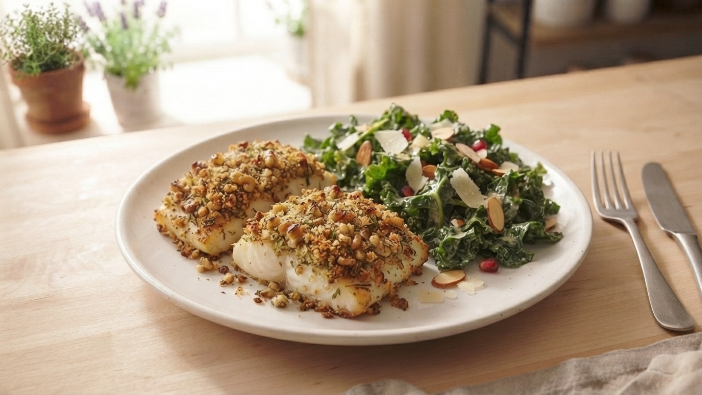
3. Walnut-Crusted Baked Cod with Kale Salad
A family I talked to while researching this piece told me their kids flat-out wouldn’t touch fish, until a walnut crust showed up on a piece of cod.
- Crunch apparently changes everything when you’re eight.
- Spread a tablespoon of Dijon mustard over two cod fillets, press a third cup of crushed walnuts on top, and bake at 400°F for 12 to 15 minutes.
- While that’s in the oven, massage four cups of chopped kale with a tablespoon of olive oil and the juice of half a lemon for a couple minutes — this softens the leaves and kills off that raw, bitter edge kale can have. Plate them together and you’ve got dinner.
4. Ginger Turmeric Chicken and Vegetable Stir-Fry
For the people who’ve told me, pretty bluntly, that they don’t have 40 minutes on a weeknight — a ginger turmeric chicken and vegetable stir-fry gets this done in under 20, start to finish.
- Slice a pound of chicken breast thin and stir-fry it in hot oil until it’s nearly cooked through, then add a tablespoon of minced ginger and a teaspoon of turmeric.
- Toss in two cups of mixed vegetables — bell pepper, snap peas, carrots all work — and cook until they’re crisp-tender, not mushy, because mushy defeats the entire point of a stir-fry.
- Finish with a splash of low-sodium tamari off the heat.
5. Sweet Potato and Black Bean Buddha Bowl
And on meatless Mondays, it’s almost always a sweet potato and black bean Buddha bowl at my place, mostly because it reheats well and I basically always double the batch on purpose.
- Roast two medium sweet potatoes, cubed, at 400°F for about 25 minutes.
- Build bowls with a can of black beans, a couple cups of baby spinach, the roasted sweet potato, a quarter cup of pumpkin seeds, and a tahini-lemon dressing — more of it than you think you need, honestly, since the sweet potato soaks it up fast.
Comparison Table: Anti-Inflammatory vs. Inflammatory Ingredients
| Category | Anti-Inflammatory Choice | Common Inflammatory Alternative |
| Fat | Extra virgin olive oil | Refined vegetable/seed oils in excess |
| Protein | Salmon, sardines, chicken | Heavily processed deli meats |
| Carbohydrate | Sweet potatoes, quinoa | Refined white flour products |
| Sweetener | Fresh fruit | Refined sugar and syrups |
| Snack | Walnuts, berries | Fried, packaged snack foods |
Common Mistakes People Make With Anti-Inflammatory Eating
The one I see constantly is people treating this like an all-or-nothing diet — one “bad” meal happens and they just quit entirely. Consistency over weeks beats a perfect plate on any single day, every time, and it’s not close.
There’s also a cooking-method blind spot most people don’t think about. You can buy the best salmon in the store and still undercut it by frying it in cheap refined oil at too-high heat. What you cook matters. How you cook it matters almost as much, which surprises people.
Sugar snacks in sideways too, mostly through sauces, dressings, marinades — the stuff nobody reads the label on. That’s usually where an otherwise solid meal quietly falls apart.
And then there’s the variety problem. Same three vegetables, week after week, which caps the actual range of antioxidants you’re getting. Rotating colors — just paying attention to what’s actually on the plate — fixes most of this without any real effort.
Meal Planning for the Week
For older readers dealing with joint discomfort, I usually suggest starting small: two fish-based dinners and one plant-based dinner a week, then building from there once it feels manageable rather than overwhelming.
If you’re focused on workout recovery, the walnut-crusted cod tends to land well on those nights since it packs protein and omega-3s into one dish without much extra thinking required.
A structure that’s worked for a lot of readers: two fish nights, one poultry night, two plant-based nights, and two flexible nights left open for leftovers or whatever the family’s actually in the mood for. That last part matters more than people give it credit for.
Ingredient Substitutions
Got a fish allergy? Baked tofu marinated in the same turmeric-ginger mixture works surprisingly well as a stand-in. Nut allergy — crushed pumpkin seeds give the cod a similar crunch minus the walnuts.
Going vegan, chickpeas or lentils slide right into the stir-fry in place of chicken. And if the budget’s tight, frozen fish and canned beans hold up nutritionally just as well as fresh, usually for a fraction of what fresh costs.
Storage and Reheating Tips
The chickpea stew and the Buddha bowl components both keep about four days in the fridge, no real fuss reheating either on the stovetop or in the microwave. Salmon’s more delicate — reheat it low and slow, covered, with a splash of water, or it dries out fast, which is basically the worst thing you can do to salmon.
The stir-fry vegetables hold their texture best stored separate from the sauce; combine them too early and they go soft overnight.
AI Tools for Tracking Inflammation-Friendly Eating
I’ve messed around with a few nutrition apps that flag ingredients tied to inflammatory eating patterns. Genuinely useful for spotting your own habits over a few weeks, without turning it into obsessive calorie-counting.
A couple of grocery-planning apps now suggest anti-inflammatory swaps automatically while you build your list, which has shaved real time off my own planning. Worth trying. Just don’t let it replace actually knowing what’s on your plate.
Conclusion
None of these recipes ask you to trade flavor for health — that trade-off was never actually necessary. What’s made the real difference, both in my kitchen and in the feedback I hear from readers, is consistency: building most weeknight dinners around a handful of these staples instead of chasing a perfect plate every single time. Pick one recipe. Make it this week. Let the pattern build from there.
Frequently Asked Questions
What foods actually count as anti-inflammatory?
Fatty fish, leafy greens, berries, turmeric, ginger, olive oil, nuts — that’s the short list nutrition research keeps coming back to.
Can food alone fix chronic inflammation?
Not on its own, no. Sleep and stress and activity level all play into it too. But eating patterns built around whole foods do consistently link to lower inflammatory markers in the research.
How long before I’d actually notice a difference?
Depends a lot on the person, honestly. Nobody feels a dramatic shift after one meal — this tends to show up gradually, over weeks of doing it consistently.
Is this basically just the Mediterranean diet with a different name?
Close, but not quite the same thing. They overlap a lot — olive oil, fish, vegetables, whole grains — though they’re not identical frameworks.
What should I actually be cutting back on?
Refined sugar, heavily processed meats, too much refined vegetable oil, refined carbs. The usual suspects, basically.
Doesn’t eating like this get expensive fast?
Not really, no. Beans, frozen fish, whatever vegetables are in season — all cheap, all fit fine into this pattern.
I don’t eat meat. Can I still do this?
Easily. Chickpeas, lentils, greens, nuts, olive oil — that covers the core of it without touching meat at all.
Does turmeric actually do anything, or is that overhyped?
It contains curcumin, which has been studied for anti-inflammatory properties — though your body absorbs it better paired with black pepper and a bit of fat. Worth knowing if you’re just sprinkling it on dry.