
AUTHOR BIO
I’m a food content writer who has spent years researching the Mediterranean diet and other well-established eating patterns, testing recipes in my own kitchen, and studying how traditional cooking styles translate into everyday, realistic meals. My work draws on extensive review of trusted nutrition resources and hands-on recipe testing rather than formal medical training. I’m not a doctor or registered dietitian — my expertise comes from research, practice, and a genuine love of approachable, evidence-informed cooking.
Introduction:
The first time I tried to “start” the Mediterranean diet, I made the same mistake I now see constantly in reader messages: I bought a long list of unfamiliar ingredients, attempted a complicated recipe on a Tuesday night, and gave up by Thursday.
It wasn’t the diet that failed — it was my approach to it. Somewhere along the way this eating pattern picked up a reputation for being complicated, when really, once you strip away the intimidating packaging, it’s some of the simplest, most forgiving cooking I’ve ever done.
After years of researching the core principles, testing a stack of beginner-friendly recipes, and paying attention to which ones actually stuck for readers versus which got abandoned after one try, I put this together for people starting from zero. No obscure ingredients, no hour-long prep times — just food that’s genuinely good to eat.
What the Mediterranean Diet Actually Is
It’s not a rigid plan with a list of forbidden foods. It’s an eating pattern rooted in the traditional cooking of countries around the Mediterranean Sea, Greece and southern Italy especially — olive oil as the main fat, plenty of vegetables, whole grains, legumes, fish, moderate dairy and wine, and red meat showing up occasionally rather than every night.
What struck me most while digging into this was how much room there actually is inside the pattern. There’s no single “correct” Mediterranean meal. There’s a set of loose principles and a lot of space to build around whatever’s fresh and seasonal and actually appeals to you that week.
Why It’s Consistently Recommended by Researchers
Of the eating patterns nutrition researchers have studied, this one shows up again and again tied to positive outcomes across large population studies, particularly around heart health.
Part of what makes it so widely recommended, from what I’ve gathered researching the topic extensively, is that it isn’t built around restriction — it’s built around emphasis. Instead of telling you what to cut out, it emphasizes what to eat more of, which tends to make it far easier to stick with long-term compared to more restrictive approaches.
Beginner-Friendly Mediterranean Recipes
1. One-Pan Greek Lemon Chicken and Potatoes
This was the recipe that finally made the Mediterranean diet click for me — one pan, minimal ingredients, maximum flavor.
Ingredients:
- 4 bone-in chicken thighs
- 4 medium potatoes, quartered
- 1/4 cup olive oil
- Juice of 2 lemons
- 3 cloves garlic, minced
- 1 tablespoon dried oregano
Method: Toss potatoes and chicken with olive oil, lemon juice, garlic, and oregano directly on a sheet pan. Roast at 425°F for 40-45 minutes until the chicken is golden and the potatoes are tender.
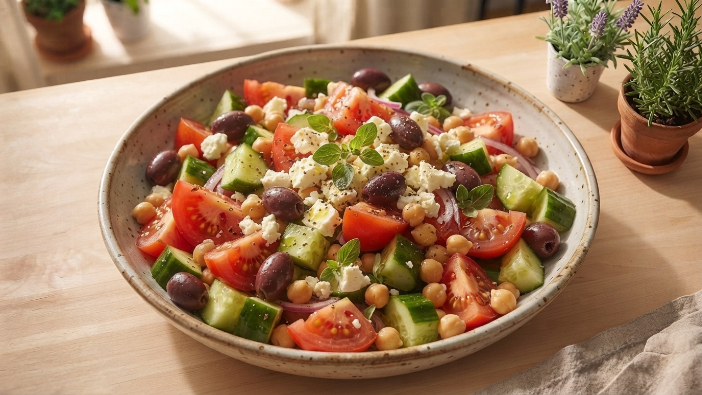
2. Greek Salad with Chickpeas
A simple lunch or light dinner that takes ten minutes and requires no cooking at all.
Ingredients:
- 1 cucumber, chopped
- 2 tomatoes, chopped
- 1/2 red onion, thinly sliced
- 1 can chickpeas, drained
- 1/2 cup crumbled feta
- Handful of kalamata olives
- Olive oil, red wine vinegar, oregano
Method: Combine all vegetables and chickpeas in a bowl, top with feta and olives, and dress generously with olive oil, vinegar, and oregano.
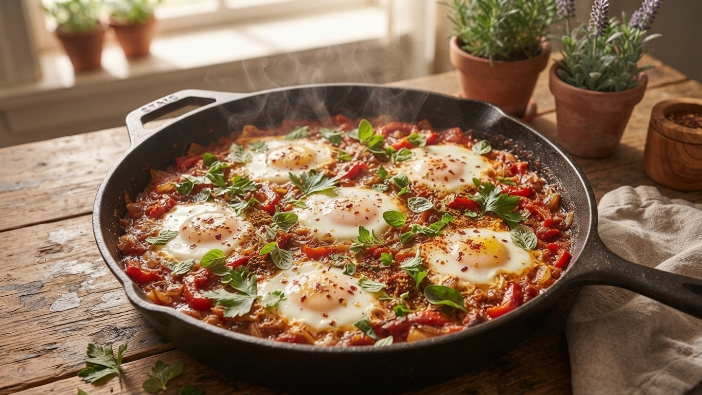
3. Simple Shakshuka
I learned this recipe from researching North African and Eastern Mediterranean cooking traditions, and it’s now a weekend staple in my house.
Ingredients:
- 1 tablespoon olive oil
- 1 onion, diced
- 1 red bell pepper, diced
- 1 can crushed tomatoes
- 1 teaspoon cumin, 1 teaspoon paprika
- 4 eggs
Method: Sauté onion and pepper in olive oil until soft, add tomatoes and spices, simmer 10 minutes, then crack eggs directly into the sauce and cover until the whites set, about 5-7 minutes.
4. White Bean and Tuna Salad
For a busy professional who’s told me she eats this straight from the container at her desk most days, this recipe is proof that Mediterranean eating doesn’t need to be elaborate.
Ingredients:
- 1 can white beans (cannellini), drained
- 1 can tuna in olive oil, drained
- 1/4 cup chopped red onion
- 2 tablespoons chopped parsley
- Olive oil, lemon juice, salt, pepper
Method: Combine everything in a bowl, dress with olive oil and lemon juice, and let sit for a few minutes before serving to let the flavors meld.
5. Roasted Vegetable and Farro Bowl
This became a favorite after a family I spoke with mentioned needing a Mediterranean recipe flexible enough to use up whatever vegetables were in the fridge.
Ingredients:
- 1 cup cooked farro
- 2 cups mixed roasted vegetables (zucchini, eggplant, cherry tomatoes)
- 1/4 cup crumbled feta
- Handful fresh basil
- Olive oil and balsamic drizzle
Method: Roast chopped vegetables at 400°F for 25 minutes, then combine with cooked farro, feta, and basil, finishing with olive oil and a light balsamic drizzle.
Mediterranean Pantry Staples Table
| Staple | Common Use | Why It Matters |
| Extra virgin olive oil | Cooking fat, dressing base | Primary source of healthy fat in the diet |
| Canned chickpeas/beans | Salads, stews | Affordable plant protein and fiber |
| Whole grains (farro, bulgur) | Grain bowls, sides | Fiber and sustained energy |
| Feta cheese | Salads, toppings | Moderate dairy in concentrated flavor |
| Fresh herbs (oregano, parsley) | Seasoning | Flavor without added sodium |
| Canned fish (tuna, sardines) | Quick protein | Omega-3s, minimal prep needed |
Mistakes Beginners Commonly Make
Mistake 1: Buying too many specialty ingredients at once. Overwhelm is the number one reason I see beginners quit within the first week. Start with olive oil, canned beans, and whatever vegetables you already like.
Mistake 2: Treating it as a low-fat diet. Olive oil is generously used throughout Mediterranean cooking — this isn’t a low-fat approach, it’s a “better fat” approach.
Mistake 3: Skipping legumes. Beans and lentils are one of the most defining, and most overlooked, elements of the diet. Many beginners focus entirely on fish and olive oil while ignoring this affordable protein source.
Mistake 4: Assuming every meal needs to be “authentic.” You don’t need to master traditional Greek or Italian cooking. The core principles apply just as well to a simple sheet-pan dinner as they do to a multi-hour braised dish.
A Simple Weekly Meal Plan
For a student just learning to cook, I usually suggest starting with three of these on rotation for the first couple weeks — the Greek salad, the tuna salad, the sheet-pan chicken — before layering in anything else.
For a parent juggling a family’s different tastes, the farro bowl tends to adapt best, since you can swap in whatever vegetables the household already eats without a fight.
A simple starting structure that’s worked for a lot of readers: two no-cook meals (Greek salad, tuna salad), two one-pan meals (chicken and potatoes, shakshuka), and one flexible grain bowl for using up whatever’s left over by the end of the week.
Ingredient Substitutions
Going gluten-free just means swapping farro for quinoa or brown rice in the grain bowl — no real loss there. Dairy-free is even simpler: skip the feta, or use a plant-based version, and the salads hold up fine without it.
If you’re pescatarian, lean harder into the tuna salad and shakshuka and just add more fish dinners generally. And if money’s tight, canned beans, canned tuna, and whatever vegetables are in season keep this whole way of eating affordable — you genuinely don’t need imported olive oil or specialty ingredients to eat this way well, despite what some blogs imply.
Storage Tips
The Greek salad with chickpeas keeps about two days if you hold off adding the feta until you’re actually serving it, since the vegetables release liquid as they sit and things get watery fast otherwise.
Shakshuka reheats well in a covered skillet over low heat — don’t rush this part or the eggs turn rubbery. The farro bowl components are better stored separately and assembled right before eating; they’ll keep about four days that way and come together in a couple minutes for lunch.
Using Apps to Simplify Mediterranean Meal Planning
A few AI-powered meal planning apps have actually been useful here, especially the ones that let you plug in whatever’s already sitting in your pantry and suggest recipes built around it, which cuts down on food waste more than I expected it would.
Some grocery apps now have a “Mediterranean diet” filter too, which speeds up building a shopping list — small thing, but it’s saved me real time.
Conclusion
The Mediterranean diet earned its reputation the hard way, through decades of research showing real benefit, but it never actually needed to be complicated to deliver on that. Start with one or two of these this week, keep the pantry simple, and let the rest build itself from there.
The goal was never perfection. It was always just good food, eaten consistently, which turns out to be a much lower bar than the internet makes it sound.
Frequently Asked Questions
Is the Mediterranean diet actually a “diet,” or something looser?
Looser, honestly. It’s more of an eating pattern based on traditional Mediterranean cooking — heavy on olive oil, vegetables, whole grains, legumes, and fish, with red meat showing up less often — than a strict plan with rules to follow.
Will it actually help with weight loss?
Research points to it supporting gradual, sustainable weight management over time, though that still depends a lot on overall calorie intake and how active you are day to day. It’s not a shortcut.
What should someone brand new to this even buy at the store?
Olive oil, canned beans, whatever fresh vegetables look good, whole grains, some fish. That’s genuinely most of it — nothing specialty required.
Do I have to drink wine for this to “count”?
No. Wine shows up in some Mediterranean cultures’ version of this pattern, in moderation, but it’s optional. Plenty of people follow this eating style without touching a drop.
How much olive oil is the “right” amount daily?
There’s no fixed number that I’d point to confidently. Traditional versions of this pattern just use it generously as the main cooking fat rather than measuring it out in tablespoons.
Can this actually work on a tight grocery budget?
Yes — canned beans, canned fish, seasonal produce, and whole grains are some of the cheapest things in any grocery store, and they’re the backbone of this whole way of eating.
So red meat is completely banned?
Not banned, just less frequent. Think occasional rather than nightly, and you’ve basically got it.
What’s genuinely the easiest recipe to start with?
The Greek salad with chickpeas. No cooking, common ingredients, maybe ten minutes from fridge to table