
Author Bio
I write about food with an eye toward what’s actually doable on a real weeknight, not just what photographs well. Everything here came out of my own kitchen, tested on nights when I had maybe twenty minutes and not much patience left. I read a fair amount of nutrition research alongside that, mostly so I can hand people recipes that hold up nutritionally without asking for more time or energy than anyone actually has left after 6pm.
Introduction:
There was a stretch a few years back — working full-time, coaching my kid’s soccer team most evenings, still somehow expected to get dinner on the table by 6:30 — where the takeout menus just kept piling up on the counter until I couldn’t stand looking at them anymore.
That’s really what pushed me into one-pot cooking. Not a trend I read about somewhere. I needed it to work, or we were eating cereal for dinner three nights a week, and my kid was starting to notice.
Since then I’ve gone through more one-pot recipes than I can count, tossed the ones that fell flat (there were a lot), and kept the handful that actually deliver on flavor, nutrition, and speed at the same time. If your weeknights feel like a sprint between work, kids, errands, and just being tired — this one’s for you.
What Actually Makes a Meal “One-Pot”
A real one-pot meal cooks the protein, the vegetables, and usually some kind of starch — rice, pasta, whatever — all in the same pan, start to finish.
It’s a bit different from a sheet pan dinner, which leans on the oven instead of the stovetop, but they’re chasing the same thing: fewer dishes, less standing around, and honestly better flavor, because everything’s simmering together in the same liquid instead of getting cooked separately and reunited on a plate at the last second.
None of this is new. Stews, risottos, braises — people have been cooking this way for centuries. What’s shifted is what’s actually going into the pot. Leaner proteins. More vegetables. A lot less heavy cream and butter than the older versions of these dishes leaned on.
Also read Healthy One-Pot Meals in Less Than 30 Minutes , if you want to cook early.
Why This Keeps Winning Out for Me
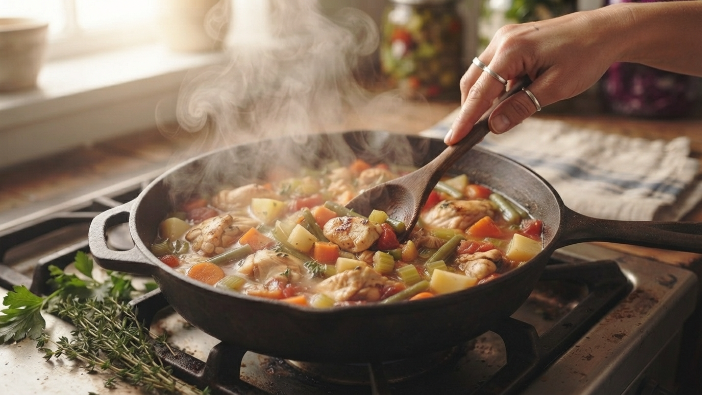
I’ve tried a lot of different meal-prep systems over the years, and one-pot cooking is the one that keeps sticking. A few reasons, and they’re not the ones you’d expect from a recipe blog.
Cleanup drops a lot, and that matters more than people admit when you’re running on fumes by 7pm and the last thing you want is three pans and a cutting board waiting for you.
Flavor tends to come out better, too — everything’s simmering together, sharing juices, instead of sitting apart on a plate pretending to be a cohesive meal.
And weirdly, it’s easier to actually see what’s going into dinner when the whole thing’s in one pot in front of you. Compare that to a three-pan meal, where the vegetables quietly get “forgotten” more often than anyone likes to admit.
People ask me sometimes if one-pot meals are automatically less healthy, since pasta or rice shows up in a lot of them. They’re not. Lean protein, a decent amount of vegetables, a reasonable portion of whole grains — that fits inside any normal healthy eating framework just fine. The pot doesn’t make it unhealthy. What you put in it does.
Kitchen Equipment That Actually Helps
| Equipment | Why It Helps | Essential? |
| Large heavy-bottomed pot or Dutch oven | Even heat, less scorching | Yes |
| Deep skillet with lid | Handles pasta and rice dishes well | Yes |
| Sharp chef’s knife | Speeds up prep more than people expect | Yes |
| Wooden spoon | Won’t scratch nonstick surfaces | Nice to have |
| Instant-read thermometer | Confirms the protein’s actually done | Nice to have |
You don’t need a single specialty gadget for any of this. A solid pot and a knife that actually cuts get you through almost everything below.
Recipe 1: One-Pot Lemon Chicken and Vegetables
This is the one I default to when I need something comforting and reliable and don’t want to think too hard about it.
Ingredients:
- 4 boneless, skinless chicken thighs
- 2 tablespoons olive oil
- 1 onion, diced
- 3 garlic cloves, minced
- 2 cups baby potatoes, halved
- 2 cups green beans, trimmed
- 1 cup chicken broth
- Juice and zest of 1 lemon
- 1 teaspoon dried oregano
- Salt and pepper to taste
Instructions:
- Heat the olive oil in a large pot over medium-high and sear the chicken thighs 3-4 minutes a side. Pull them out, set aside.
- In the same pot, sauté the onion and garlic until you can smell it, maybe 2 minutes.
- Add the potatoes, broth, lemon juice, zest, and oregano. Bring it to a simmer.
- Put the chicken back in, cover, cook 15 minutes.
- Add the green beans, cover again, and give it another 8-10 minutes until the chicken hits 165°F.
- Salt and pepper before you serve it — not before, the sauce needs to reduce first or you’ll oversalt it.
Recipe 2: One-Pot Pasta Primavera
This one got me through grad school. Cheap, fast, and it’ll bend around whatever’s starting to go soft in your vegetable drawer.
Ingredients:
- 8 oz whole wheat pasta
- 2 cups vegetable broth
- 1 cup cherry tomatoes, halved
- 1 zucchini, sliced
- 1 cup broccoli florets
- 2 garlic cloves, minced
- 2 tablespoons olive oil
- 1/4 cup grated parmesan
- Fresh basil, torn, for the end
Instructions:
- Heat the oil in a large skillet, sauté the garlic for about a minute — don’t walk away, it burns fast.
- Add the pasta and broth, bring to a boil, then drop it to a simmer.
- Five minutes in, add the broccoli and zucchini.
- Keep cooking, stirring every couple minutes so nothing sticks, until the pasta’s al dente and most of the liquid’s gone — another 6-8 minutes.
- Off the heat, stir in the cherry tomatoes and parmesan.
- Basil on top right before serving, not before — it wilts if it sits in the heat too long.
Recipe 3: One-Pot Turkey Chili
Good option when you want something high in protein without a long shopping list.
Ingredients:
- 1 lb ground turkey
- 1 onion, diced
- 2 garlic cloves, minced
- 1 can black beans, drained
- 1 can diced tomatoes
- 1 cup corn kernels
- 2 tablespoons chili powder
- 1 teaspoon cumin
- 1 cup low-sodium broth
Instructions:
- Brown the turkey in a large pot over medium heat, breaking it apart as it goes.
- Add the onion and garlic, cook until soft, about 3 minutes.
- Stir in the beans, tomatoes, corn, chili powder, cumin, and broth.
- Simmer uncovered for 20-25 minutes, stirring occasionally, until it thickens up the way chili’s supposed to.
Recipe 4: One-Pot Coconut Curry Rice Bowl
An older neighbor of mine — cooks mostly for herself these days, been cooking for sixty-some years — showed me this one. Cooking the rice directly in the curry sauce saves you a pot and gets the rice way more flavor into it than plain water ever could.
Ingredients:
- 1 cup jasmine rice
- 1 can coconut milk
- 1 cup vegetable broth
- 1 tablespoon curry powder
- 1 cup chickpeas, drained
- 1 cup chopped spinach
- 1 carrot, diced
- 1 tablespoon soy sauce
Instructions:
- Toss the rice, coconut milk, broth, curry powder, chickpeas, and carrot into the pot together.
- Bring to a boil, then drop the heat, cover, and let it go 15-18 minutes. Don’t lift the lid every five minutes to check — it needs that steady, uninterrupted heat to cook through properly.
- Last couple minutes, stir in the spinach and soy sauce.
- Take it off the heat and let it sit, covered, for about 5 minutes before serving. That rest matters more than people think. The rice keeps pulling in liquid the whole time it sits.
Mistakes I See Constantly
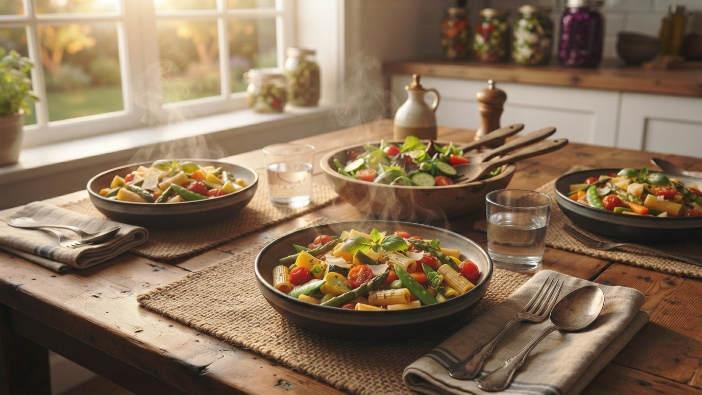
A few of the same ones show up over and over. Throwing every vegetable in at the same time is a big one — you end up with some pieces turning to mush while others are still crunchy, since they don’t all cook at the same rate no matter how much you want them to. Not enough liquid is another; things start sticking and scorching on the bottom before you even notice something’s wrong.
Skipping the sear on your protein is one I see all the time, and it costs way more flavor than people expect going in — that browning step is doing real work, not just adding color. And overcrowding the pot is the sneaky mistake nobody talks about, because it traps steam instead of letting anything actually brown the way it should.
Also read Simple Fermented Food Recipes for Better Digestion
Storage and Reheating
Most of this holds up in the fridge 3-4 days if it’s sealed properly. Rice and pasta dishes thicken up as they sit, so when you reheat them, splash in a little broth or water to loosen things back to where they started.
Chili and stews, on the other hand, usually taste better the next day — everything’s had time to sit and actually meld — which is exactly why every parent I know leans on them for next-day lunches without giving it a second thought.
What to Serve Alongside
A simple side salad rounds out the lemon chicken nicely if you want to keep things lighter. For the turkey chili, swap sour cream for a dollop of Greek yogurt — same creaminess, more protein, less fat, and most people genuinely can’t tell the difference in a blind taste test.
With the coconut curry rice bowl, don’t skip the squeeze of lime at the very end. It wakes up the whole dish more than that one small step has any right to.
Seasonal Variations
Colder months, root vegetables — sweet potato, parsnip, squash — slot right into these same recipes without much adjustment.
Come summer, swap toward zucchini, corn, cherry tomatoes, lighter stuff, and maybe pull back the broth in the chili or curry a bit so it eats more like a warm salad than a stew you’d want in January.
Nutrition Snapshot
| Recipe | Calories (per serving) | Protein | Fiber |
| Lemon Chicken and Vegetables | 380 | 32g | 5g |
| Pasta Primavera | 340 | 14g | 6g |
| Turkey Chili | 310 | 28g | 9g |
| Coconut Curry Rice Bowl | 420 | 12g | 7g |
If you’re keeping an eye on weekly nutrition goals, MyFitnessPal or one of the newer AI meal planners will let you log these and see how they fit into the rest of your week. Not required. Just useful if that’s already something you track.
Final Thoughts
One-pot cooking was never about cutting corners for me. It’s about spending less time and still landing on something that actually counts as dinner at the end of it.
After running these recipes on nights when I had nothing left in the tank, these four earned their spot in the regular rotation, and they’ve stayed there.
Pick whichever one matches what’s already sitting in your fridge and try it this week. Honestly, the cleanup alone might be what convinces you to keep going.
Frequently Asked Questions
What’s the healthiest one-pot dinner out of these? The lemon chicken and vegetables is probably the most balanced — lean protein, a good mix of vegetables, a reasonable amount of whole grain worked in.
Can these be made ahead for the week? Yes, most hold up fine for 3-4 days in the fridge, which makes them decent candidates for a Sunday batch-cooking session if that’s your rhythm.
Do these actually save time, or is that overstated? Generally, they do. Most finish in 30-45 minutes total, often faster than juggling three separate pans and trying to time them all to land at once.
How’s a one-pot meal different from a sheet pan meal? One-pot happens on the stovetop, everything in one pan. Sheet pan cooking happens in the oven on a single tray. Both cut down on cleanup — they just get there differently.
Can these work vegetarian? Easily. Beans, lentils, chickpeas, or tofu sub in for the meat in pretty much every recipe here, chili and curry included.
Why does my pasta always turn out mushy doing this? Usually too much liquid, or it just cooked a bit past done. Stick to the liquid ratio in the recipe and check the pasta a minute or two early next time around.
Are these any good if I’m watching my weight? They can be, since you can see everything in the pot at once — it’s a lot easier to actually control portions and vegetable content than when a meal’s spread across three separate dishes.
What pot should I actually be using for this? A heavy-bottomed pot or a Dutch oven. Even heat, less scorching, and it holds up across basically every recipe in this style of cooking.